The design rule behind every screen
Pay on Proof holds the agreement, checks the proof and gives people their record. It takes no deposits and sells no investments. It works within the law.
Custody you can see and leave
Held money sits with a licensed partner. You can see which one holds yours, and you can move to another member. Your rules and your record come with you.
Held by Member A, shown by name. Choose another member to move.
Sample members
Rules agreed up front
Money moves only on rules both sides agreed before anyone paid. Limits for assistants, approvals in a circle and the proof a promise needs are rules you set and can read.
02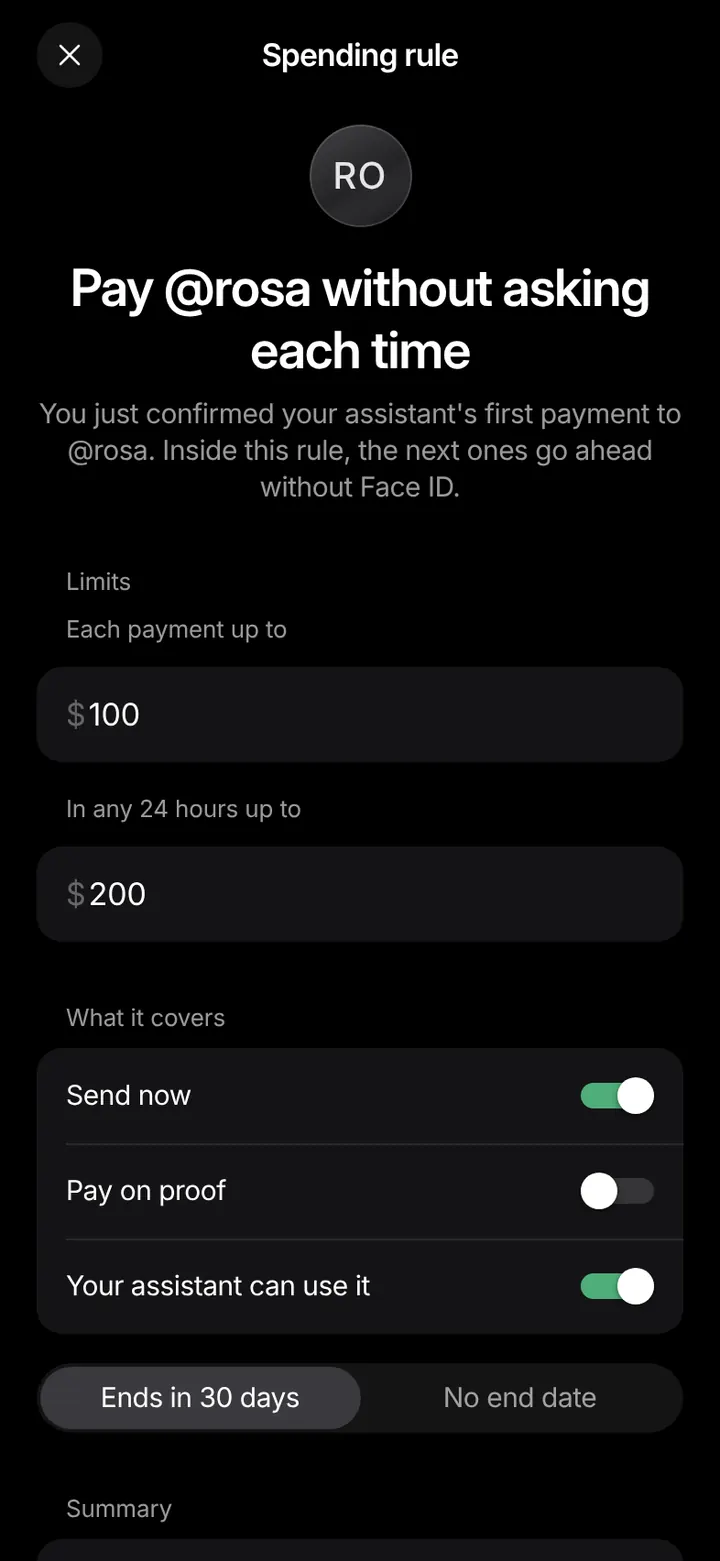
Your record
Receipts belong to the customer and travel with them. They are signed to an open standard, so they can be checked anywhere without asking us.
03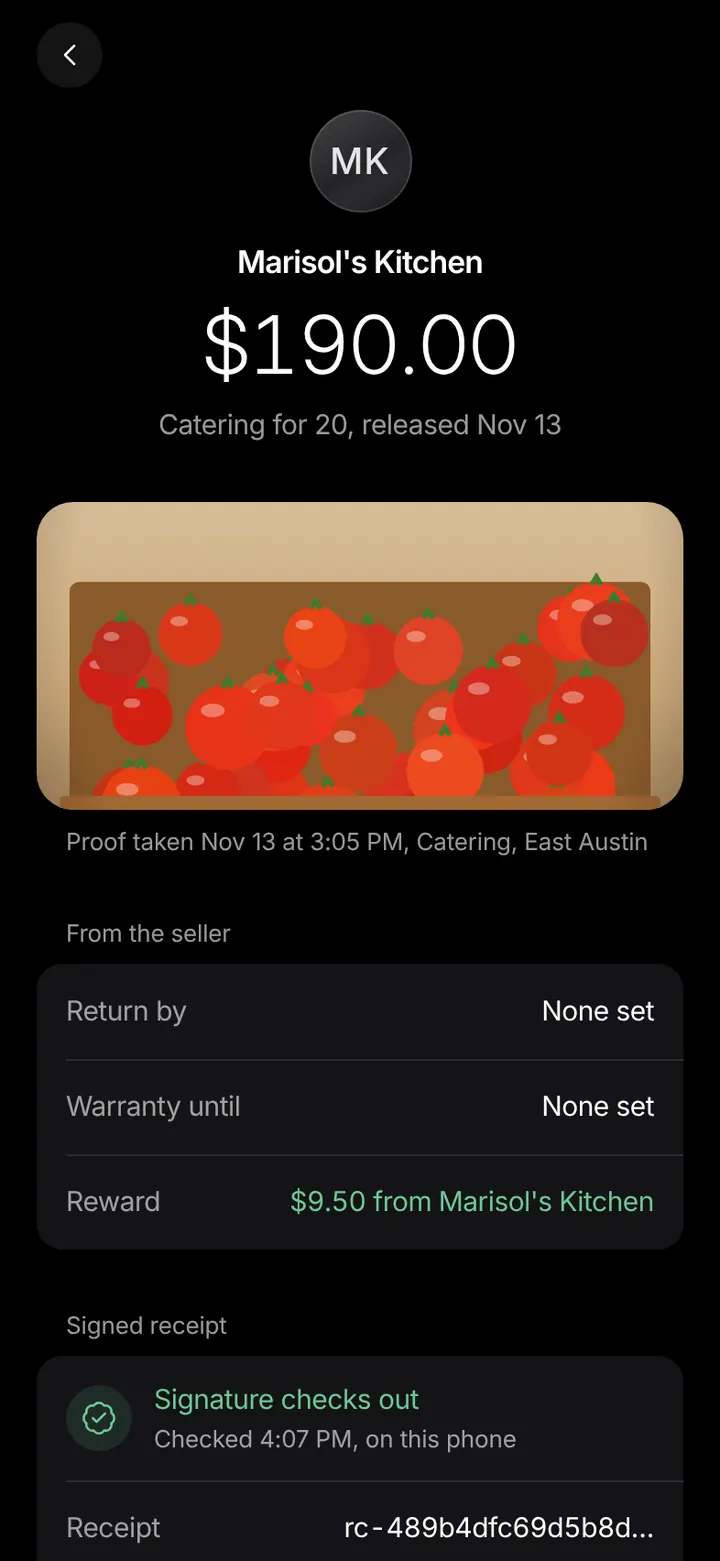
Holds that explain themselves
When the network holds a payment, it says why, for how long and how to appeal. A hold never sits without a reason.
04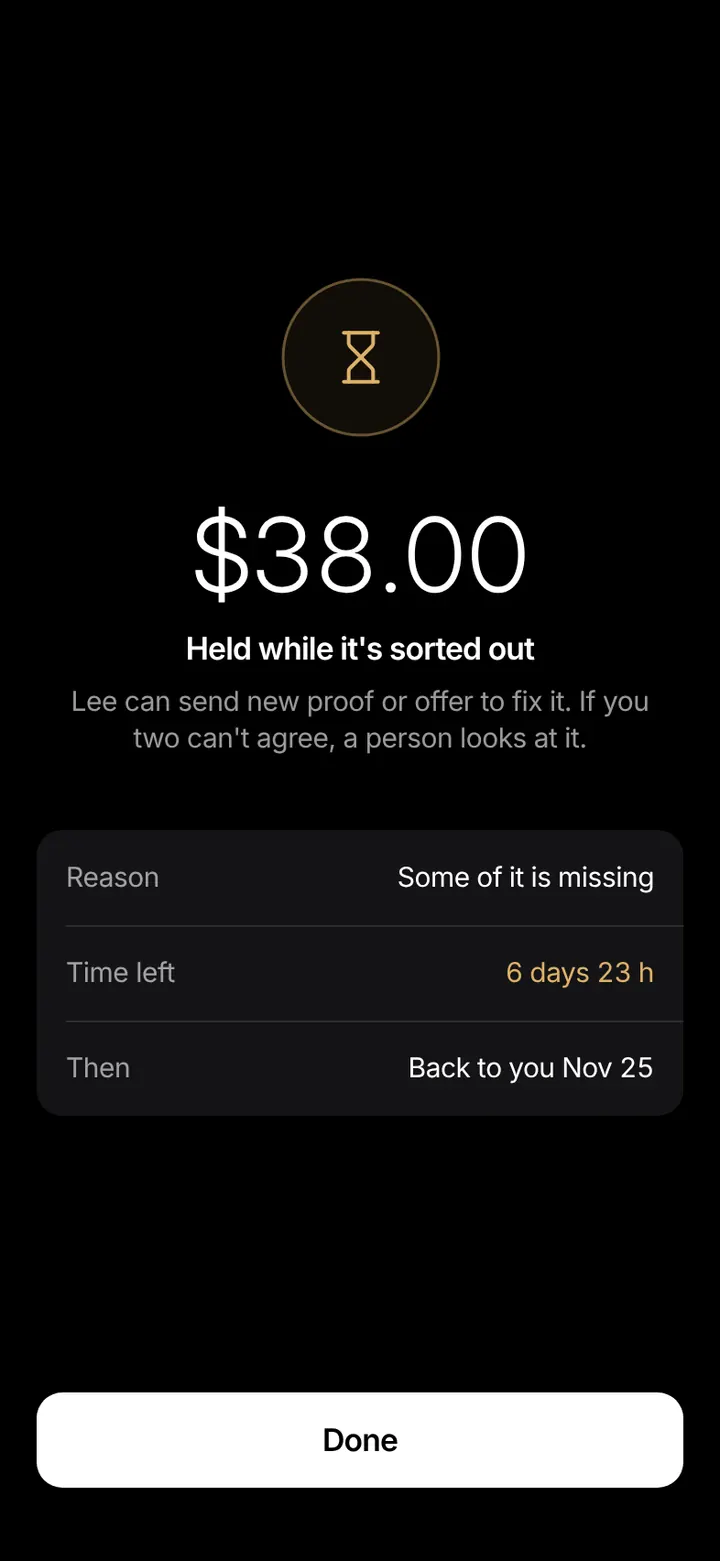
Money comes back
A promise that fails or is never proved returns the money to the person who paid, by the rules they agreed.
05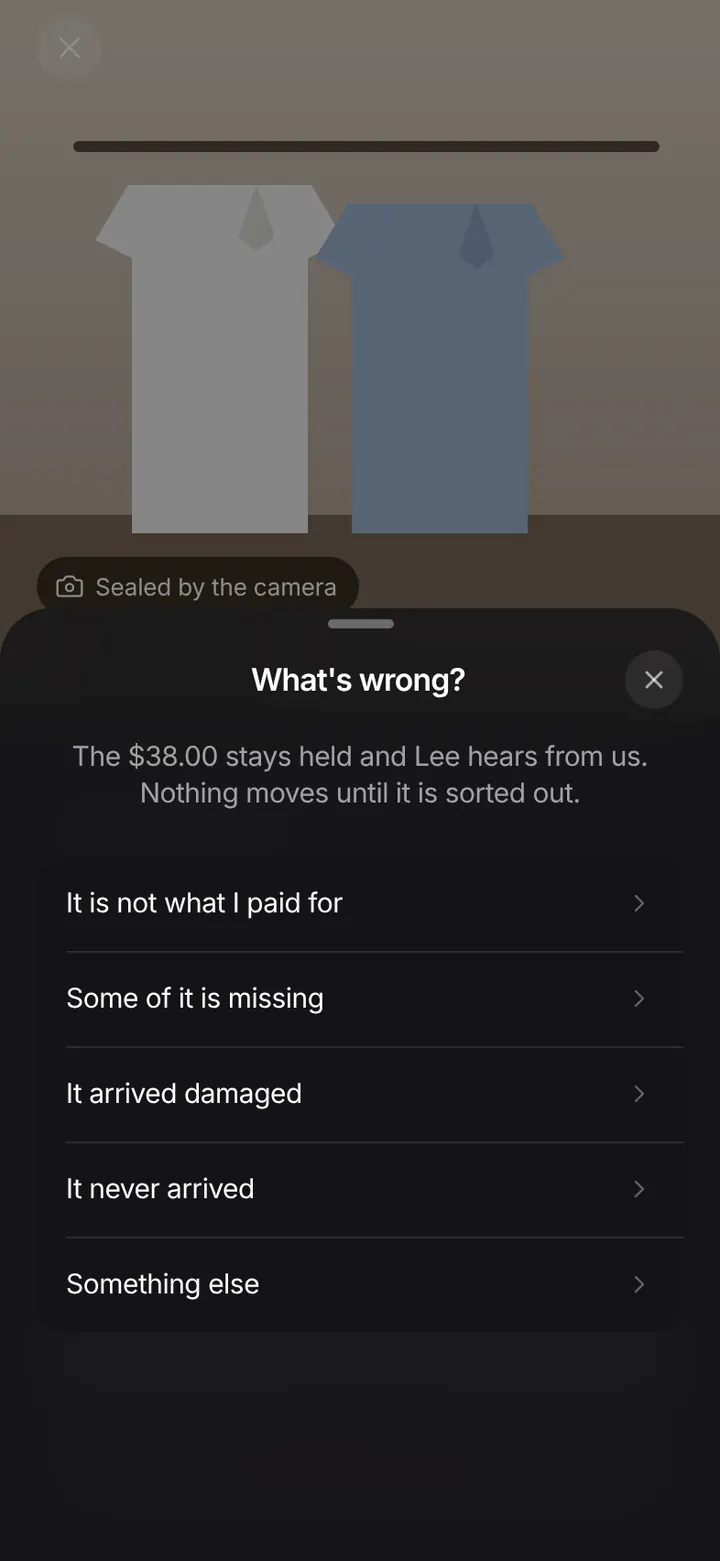
What Pay on Proof does not do
- Take deposits
- Sell investments
- Move held money outside its rules
- Hide the reason for a hold
- Keep your receipts from you
Join the waitlist
We open market by market and write by email when Pay on Proof opens where you are.